





Mitigation means one thing: keeping the damage from getting any bigger. Do not confuse it with rebuilding. It is everything done before the repair to protect what is still sound. For State College homes, that means we stop the source, pull the water out, seal off wet areas and get the structure stable. When this stage goes right, there is less to rebuild afterward, occasionally nothing at all.
People often use mitigation and restoration to mean the same thing. Each is its own phase of the job. During mitigation, the urgent part, the loss is halted, its spread is limited and the home is made stable. Afterward comes restoration, when dryness is verified and ruined flooring, drywall and finishes get fixed or rebuilt. Insurance companies also bill the two as separate line items, which makes it useful to know your current phase.
A typical mitigation visit covers four things. Source control, so no new water enters. Second is extraction, to clear out standing water. Three: contain the area with plastic sheeting and managed airflow, so clean rooms stay free of moisture and contaminants. Four: stabilize by pulling materials beyond saving, applying antimicrobial to surfaces and setting up air movers plus dehumidifiers. Along the way, your belongings and furniture get moved or set up on blocks to keep them safe.
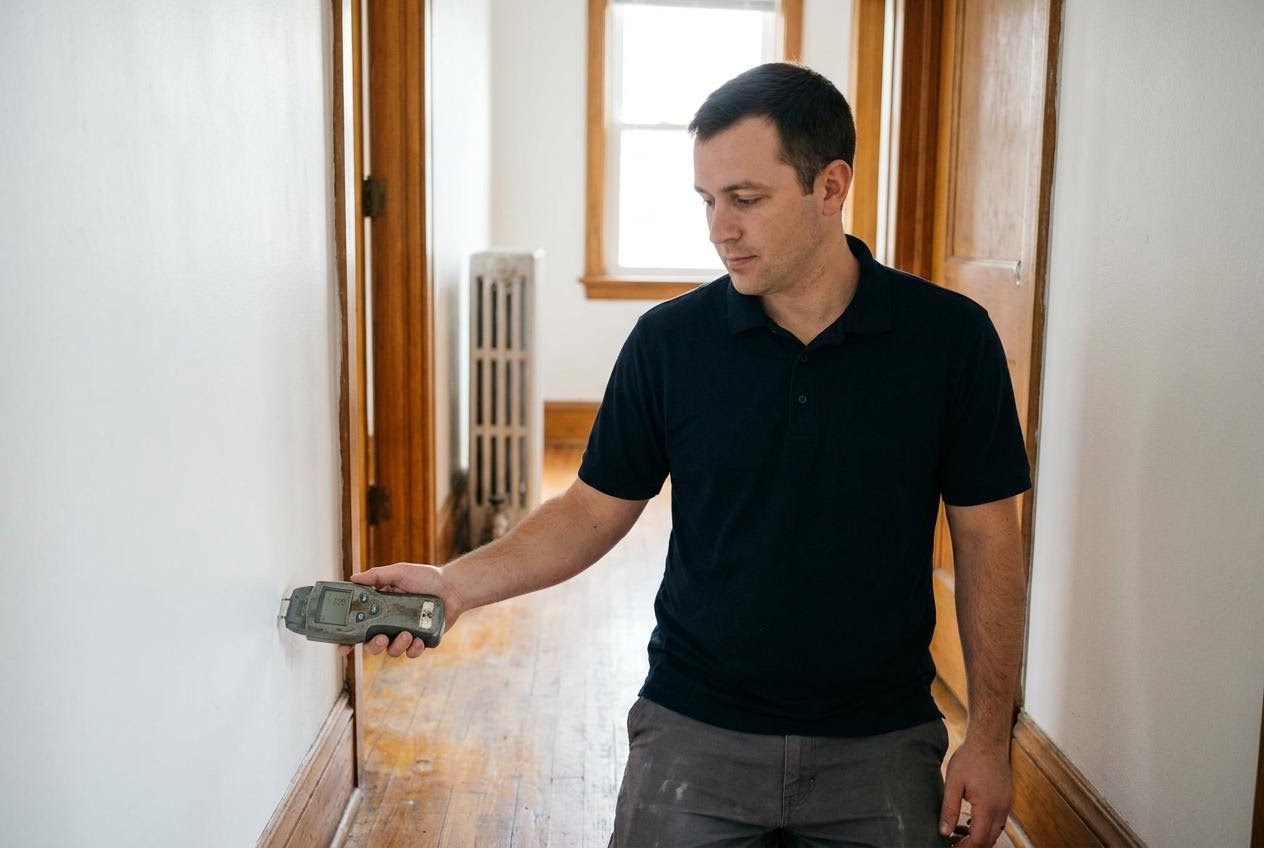
How to Tell You Need Water Damage Mitigation
Recognizing the warning signs early can save you time, money, and prevent significant damage to your property. Watch for these telltale signs that professional help is needed:
- Following a water loss, indoor air stays damp and condensation forms on the glass.
- The space under your cabinets in the bathroom or kitchen took on water you cannot get to.
- Plumbing repairs are done, but no one has addressed what got wet.
- Along the floor, water is travelling out of one room and into another.
- A leak has been stopped but floors, walls or cabinets are still wet.
- Wet materials have sat for a day and a musty smell is starting.
- An adjuster or agent said you must reasonably limit additional damage.
Act Before It Gets Worse
What seems like a minor issue today can turn into a major expense tomorrow. If you notice any of these signs, contact State College Restoration at (513) 740-9861 for a prompt evaluation.
Water Damage Mitigation Issues? We Can Help.
Get a free estimate from our expert team today.
Get Help: (513) 740-9861Water Damage Mitigation, Step by Step
Our systematic approach delivers quality results on every project. Here's how we handle water damage mitigation from start to finish:
Control the Source
We shut off the supply, cap the failed line, or tarp and board the opening where water is entering. When the permanent repair calls for a roofer or plumber, we help schedule it.
Extract the Water
Pumps and extractors take out the standing water, and we inspect the carpet and pad. Getting bulk water out quickly does more to limit damage than any amount of drying equipment alone.
Contain Wet Areas
Wet rooms are closed off from dry ones with barriers of plastic sheeting and controlled airflow. That way dust, humidity and contaminants do not move through the home during the work.
Stabilize the Structure
Materials past saving come out, an antimicrobial is applied to surfaces, and air movers plus dehumidifiers go in. We log moisture readings each visit until the structure is ready for repairs, usually within 3 to 5 days.
What a Professional Brings to Water Damage Mitigation
Fast decisions, one after another, are what mitigation consists of. Which drywall can be dried in place and which has to be cut out? Which category applies, 1, 2 or 3, and did that change after the leak first began? Should the toe kick under the cabinets be pulled? We answer those questions with training and moisture readings rather than by the look or feel of a surface.
Your insurance claim benefits from proper mitigation too. Owners are required by most policies to take reasonable steps against further damage, and the insurer will ask for evidence. Arrival photos, daily moisture readings and an inventory of removed materials all go into our records. Together those records show the water's effect and our response to it. The repair contractor gets a clear place to start as well, without hidden moisture waiting behind fresh drywall.
How to Prevent Water Damage Mitigation Problems
A little prevention goes a long way in avoiding expensive restoration emergencies. Here are our expert recommendations:
- Trade rubber washer hoses for braided steel, and renew them roughly every five years.
- Schedule an annual water heater inspection and swap the unit out before its tank gives way.
- Downspouts should empty well clear of the foundation, and gutters need to stay free of debris.
- Before heavy rain returns, caulk openings at doors, windows and roof penetrations.
- Learn where your main shutoff is and confirm the valve still turns.
- Have an automatic shutoff fitted, so the main closes itself once a leak is sensed.
Want a Professional Opinion?
We provide honest advice and free estimates on all water damage mitigation work.
Get Help: (513) 740-9861Your Water Damage Mitigation Questions Answered
Should You DIY or Call a Pro?
Some simple tasks are suitable for DIY, but most water damage work benefits from professional tools, training, and experience. Here's a comparison:
| Factor | DIY Approach | Professional Service |
|---|---|---|
| Contaminated water | Wiping obvious spots with bleach | Category-specific antimicrobial applied |
| Source control | Turn it off and assume it held | Source confirmed, isolated and documented |
| Drying check | Touch test on the surface | Moisture tracked until numbers are normal |
| Proof for insurer | Snapshots, no readings | Daily moisture logs and photo record |
| Water removal | Soaking it up by hand | Pumps and extractors clear bulk water |
Schedule Your Water Damage Mitigation Service
Don't let water damage problems get worse. Call State College Restoration now for prompt, professional service.
Call (513) 740-9861 Today