





Water does not wait for business hours. Picture a supply line bursting at 2am: the longer it runs, the further the water reaches. In State College, we pick up emergency calls around the clock. You talk to a live person who gathers the basics and dispatches a crew. Our only job on the initial visit: shut down the water and hold the damage where it is.
Here is what happens when you call. First come three questions: what is the source, is it still flowing, and is the electricity safe? When the main valve is within reach, we guide you step by step in turning it off. Once we arrive, we find the source, check which rooms are wet with moisture meters, and start removing water. We lift furniture onto blocks or carry it and your belongings clear of the wet floor.
Speed matters because water damage gets worse on a clock. Within hours, water climbs up into the drywall. Cupping shows up in wood flooring. Mold can begin growing in 24 to 48 hours. Same-night work usually means a smaller, quicker, less costly job than waiting out the weekend. Not certain it counts as an emergency? Call, and you will get a straight answer.
How to Prevent Emergency Water Damage Restoration Problems
A little prevention goes a long way in avoiding expensive restoration emergencies. Here are our expert recommendations:
- Wrap plumbing in cold, unheated parts of the house so a hard freeze cannot crack it.
- Aging supply lines to toilets, faucets and washing machines should be swapped out before one fails.
- Going away longer than a few days? Close the main water valve first.
- Run a check on the sump pump ahead of wet weather, and think about adding battery backup.
- Being able to find the electrical panel quickly means wet areas can be de-energized without risk.
- Important paperwork and valuables belong above floor level, most of all on the lowest story.
Emergency Water Damage Restoration Issues? We Can Help.
Call State College Restoration for fast, reliable service.
Call (513) 740-9861 TodayWhat to Expect From Our Emergency Water Damage Restoration
We follow a proven process to ensure every job is completed to the highest standards. Here's how we handle emergency water damage restoration from start to finish:
Answer the Call
Day or night, someone picks up, finds out where the water started, which rooms are hit and what hazards exist, then gives you steps to follow until the crew arrives.
Shut Off the Water
First we rule out shock and contamination dangers, and then whatever feeds the water gets shut down or isolated. Until the flow ends, no other step does much good.
Remove Standing Water
Standing water comes out by pump and truck-mounted extraction, furniture is shifted to dry ground, and thermal imaging plus meters reveal the moisture inside walls and under floors.
Stabilize and Plan
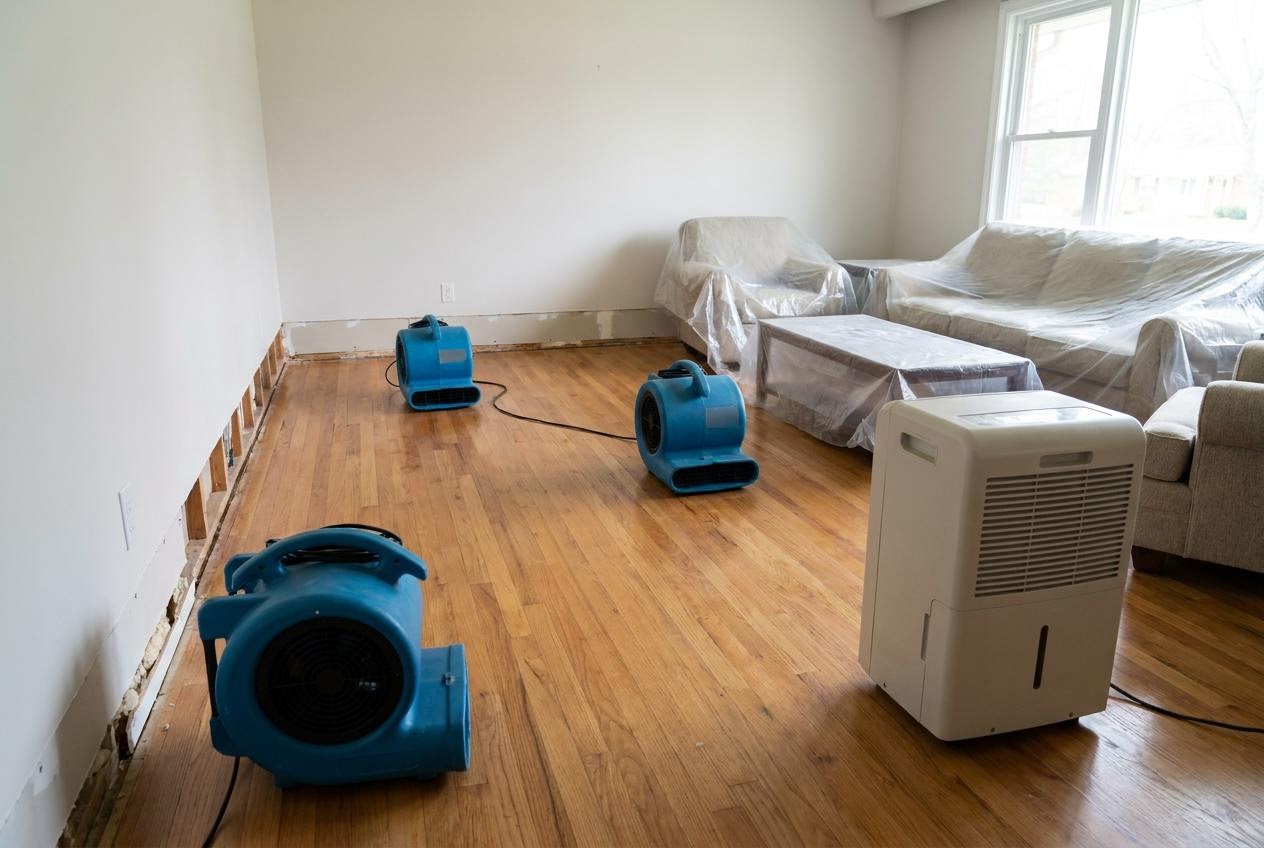
Before leaving, we place dehumidifiers and air movers. Afterward our team explains what turned up, what to expect during the 3 to 5 days of drying ahead, and which records your insurance company needs.
Comparing DIY and Professional Emergency Water Damage Restoration
While some minor restoration tasks can be handled by handy homeowners, most water damage work requires professional expertise, specialized equipment, and proper safety training. Here's a comparison:
| Factor | DIY Approach | Professional Service |
|---|---|---|
| Moisture you cannot see | Feeling walls and hoping | Thermal camera plus meter readings |
| Extraction speed | Small wet vac emptied every few gallons | Hundreds of gallons out by truck unit |
| After-hours response | One tired person with a mop | On-call technicians, day or night |
| Claim documentation | Phone photos, if you remember | Readings and images logged from the start |
| Contents protection | Items left sitting on wet floors | Furniture raised on blocks or relocated |
When to Call for Emergency Water Damage Restoration in State College
Catching these issues early helps you avoid costly problems and protect your property. Watch for these telltale signs that professional help is needed:
- A ceiling is sagging or bulging with trapped water above it.
- The house was flooded when you walked in, with no telling how many hours it had been going.
- The breaker box, a running appliance or cords along the floor sit in the path of the water.
- What is on the floor came up from the sewer, or it is discolored and smells foul.
- Water is still flowing and you cannot find or reach the shutoff valve.
- Walls on the lower floor are wet from top to bottom because of a leak overhead.
- A growing pool on the floor is heading for the next room or running downstairs.
Early Action Saves Money
What seems like a minor issue today can turn into a major expense tomorrow. Call State College Restoration at (513) 740-9861 at the first sign of trouble.
Not Sure What You Need?
Our experienced technicians can assess your situation and recommend the best solution.
Get Help: (513) 740-9861Why Professional Emergency Water Damage Restoration Matters
Mopping the puddle in front of you is rarely the real challenge during an emergency. The difficulty lies in tracking where the remaining water travelled. Within minutes it slips under baseboards, inside wall cavities and below the floor. Our team uses moisture meters and thermal imaging to find it, so the wet areas you cannot see are treated the same night instead of being found weeks later as a smell or a stain.
Truck-mounted extractors, commercial-grade air movers and dehumidifiers matched to the room come with the crew, and no household keeps those around. The crew is trained to stay safe near contaminated water and wet wiring, and from hour one it records the loss in photos and moisture readings. Those records are useful if you file an insurance claim. From the first night to a dry house, a single crew stays on your job.
Common Emergency Water Damage Restoration Questions
Get Emergency Water Damage Restoration Help Today
Don't let water damage problems get worse. Call State College Restoration now for prompt, professional service.
Call (513) 740-9861 Today